


 38
/
2
Min Read
38
/
2
Min Read


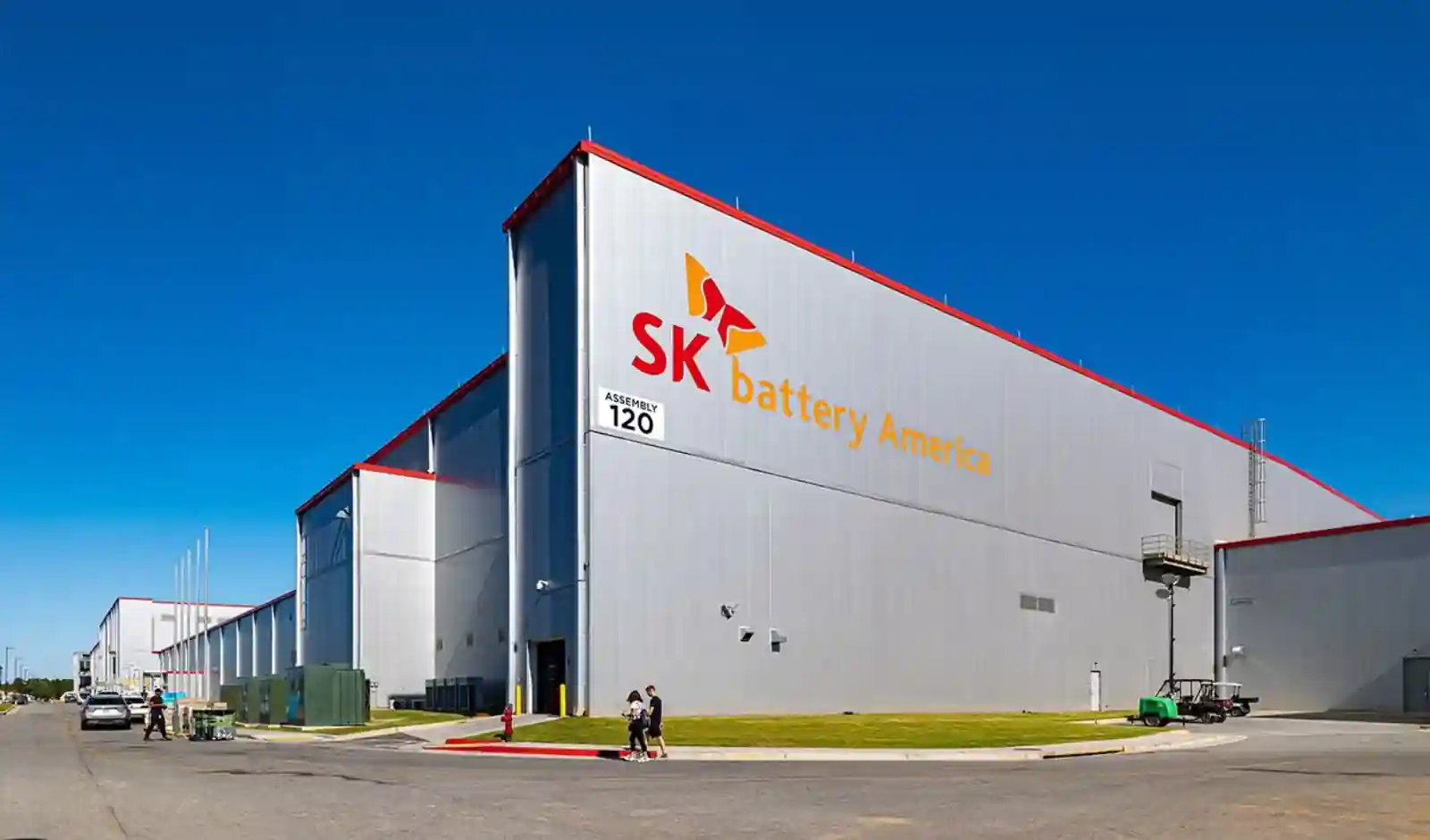
SK Battery America Inc. has laid off nearly 1,000 workers at its battery manufacturing plant in Commerce, Georgia as automakers revise their electrification strategies and uncertainty persists around consumer demand for electric vehicles.
According to a notice filed under the Worker Adjustment and Retraining Notification Act (WARN) by human resources chief Chuck Moore, Friday marked the final working day for 958 employees. However, the affected workers will continue to receive pay through May 6.
The company opened the $2.6 billion plant in January 2022, supplying batteries for the electric pickup Ford F-150 Lightning produced by Ford Motor Company. In December, Ford announced it would cancel the fully electric version of the model and instead introduce an extended-range variant.
Industry observers note that the decision also reflects slower-than-expected growth in the U.S. electric vehicle market and shifts in federal policy. Under the administration of Donald Trump, the government has moved away from aggressive electrification targets, supporting the oil and gas sector while proposing to ease emissions standards for automakers.
Previously, SK Battery America Inc. and Ford Motor Company had announced a joint investment of $11.4 billion to build battery plants in the United States, but the partnership ended in December. The company had also revealed plans in 2020 to invest $940 million to expand battery manufacturing in the Atlanta area, a move expected to create around 600 jobs.
Meanwhile, SK Group and Hyundai Motor Company are continuing development of a $5 billion battery factory near Cartersville. The state of Georgia has attracted several major EV manufacturing investments, including a $5 billion factory by Rivian and a $7.6 billion manufacturing complex by Hyundai Motor Company.
Although EV demand continues to grow, it has fallen short of earlier projections. Electric vehicles accounted for about 8% of new vehicle sales in the United States in 2025, roughly unchanged from the previous year. As losses mount and demand patterns shift, automakers such as Ford Motor Company, General Motors, and Stellantis have begun reassessing multibillion-dollar electrification strategies, delaying or revising factory projects and investments.
At the same time, hybrid and more fuel-efficient gasoline vehicles are gaining popularity among buyers concerned about driving range and the availability of charging infrastructure. The U.S. government has also removed tax credits of up to $7,500 for new and used EV purchases, a move that could further affect the pace of EV adoption in the market.


