


 24
/
5
Min Read



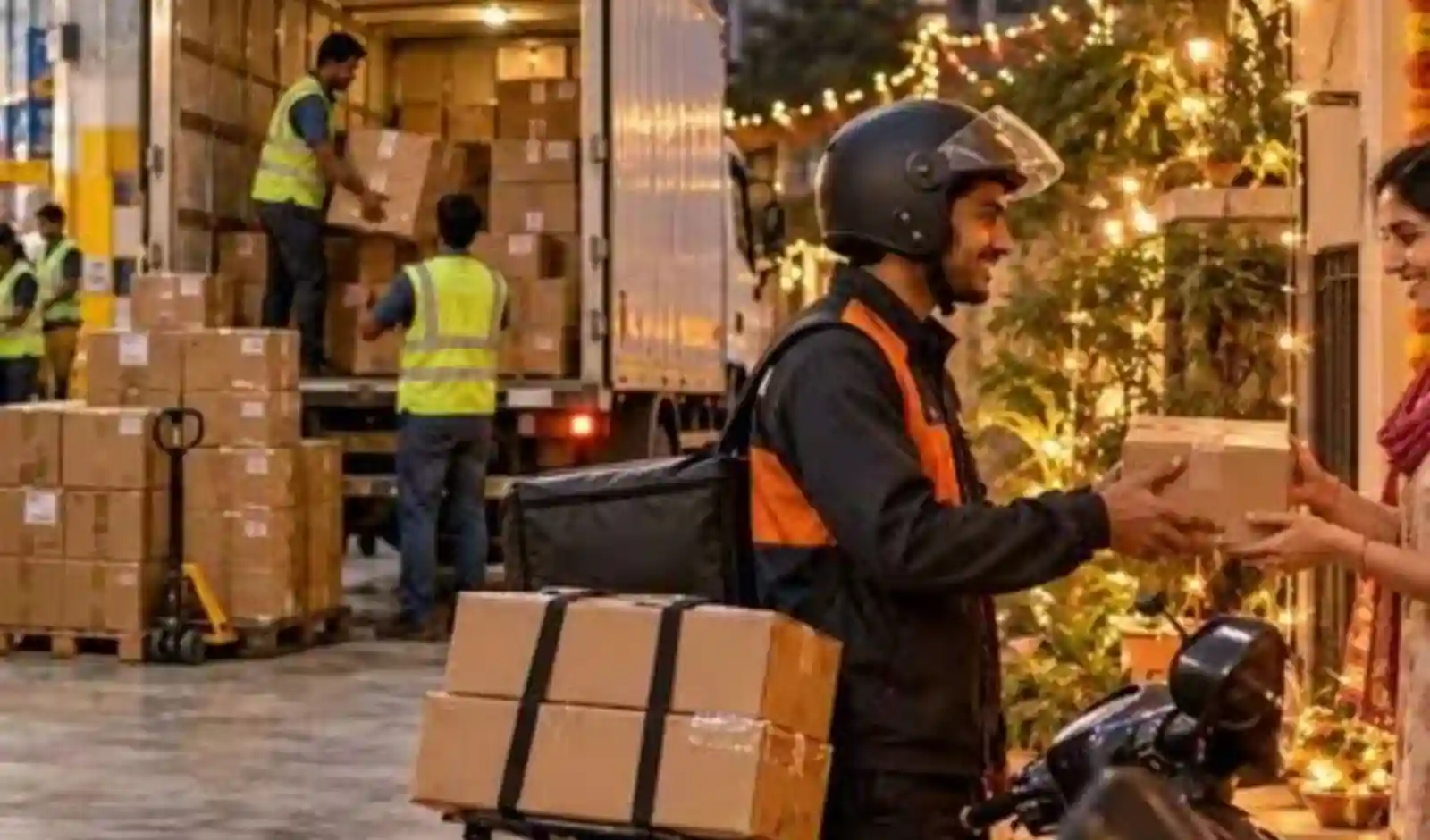
Somewhere in Bengaluru, a delivery rider begins a shift that will continue until late evening. The phone keeps buzzing with Diwali orders, gift boxes, electronics and groceries. For the rider, every additional order means more income. But for delivery companies, every order raises an important question: how much does it cost to deliver a parcel to the customer's doorstep?
This festive season, the answer is increasingly linked to electric vehicles (EVs). India's last-mile delivery fleets are gradually shifting from petrol-powered two-wheelers to battery-operated vehicles to manage rising demand and control delivery costs.
Festive Season Drives Demand for Delivery Fleets
According to talent firm Adecco India, temporary and gig hiring during the 2026 festive season is expected to reach 2.5 lakh to 2.7 lakh jobs, marking a 15–20% increase over last year's estimated 2.16 lakh jobs. E-commerce, logistics and quick commerce companies are expected to drive much of this demand.
A separate report by NLB Services estimates that Tier II and Tier III cities will account for nearly 45% of festive hiring demand, indicating that the growth is extending beyond major metropolitan cities.
For logistics companies, the challenge is not limited to hiring more delivery riders. They also need to keep vehicles operational and ensure affordable deliveries during periods of high demand.
Madhav Kasturia, Founder and CEO of Zippee, says, "The festive season puts last-mile logistics under significant pressure with higher order volumes, tighter delivery timelines and increased fleet utilisation. At Zippee, we've seen daily order volumes grow 4.5x at the network level during certain periods, highlighting the importance of managing delivery capacity efficiently."
Why EVs Make Financial Sense for Delivery Companies
The key advantage of electric vehicles lies in their operating costs. Petrol-powered two-wheelers become more expensive to operate with every additional kilometre, while electric vehicles running on fixed rental and charging plans can help maintain more predictable expenses.
Sheetanshu Tyagi, CEO of EMO Energy, explains, "A rider pays about ₹1,550 a week for the vehicle, battery, charging, and service. More orders mean greater earning potential at the same running cost. With petrol, every additional kilometre adds to the cost."
This advantage becomes more significant during festive periods when vehicles complete multiple trips every day. According to Kasturia, lower running and maintenance costs are particularly beneficial in densely populated urban markets, where higher vehicle utilisation can also help companies recover their initial investments.
The wider electric mobility market is also expanding. According to Vahan data, electric two-wheeler registrations crossed 15.61 lakh between January and September 2026, exceeding the approximately 13.42 lakh registrations recorded throughout 2025.
Government support has further strengthened the sector. In August, the Ministry of Heavy Industries extended PM E-DRIVE incentives for electric two-wheelers until March 31, 2028. The allocation for the segment was increased by ₹1,000 crore to ₹2,767 crore, while the subsidy remained at ₹2,500 per kWh, capped at ₹5,000 per vehicle.
Charging Infrastructure Remains a Key Challenge
Lower operating costs alone cannot improve delivery efficiency if vehicles spend hours waiting for charging. During peak demand, every hour a scooter remains off the road can mean missed delivery opportunities. To address this challenge, EMO Energy has installed charging infrastructure at dark stores, where delivery riders regularly collect orders.
"Our 6 kW DC chargers are located at dark stores with about 10 vehicles per charging gun, allowing riders to charge where they load," says Tyagi.
The company's more than 10,000 battery packs use its patented Active Immersion Cooling technology and are connected to its SENS platform, which monitors battery health and identifies potential faults before a breakdown.
Tyagi says EMO Energy's fleet across Bengaluru and Gurugram has grown by approximately 67% since July. During the week of October 12, the company deployed 293 vehicles in two days and onboarded around 300 new riders.
Rider Safety and Comfort Also Matter
Beyond operating costs, rider safety and comfort are becoming important considerations for delivery companies. Long working hours, heavy loads and congested roads can increase fatigue and affect delivery efficiency.
Sravan K Appana, CEO of iGowise Mobility, says, "The festive season is the ultimate stress test for India's last-mile logistics. Electric vehicles are rewriting this equation not merely through lower running costs, but by enabling higher per-trip payload capacity and superior fleet uptime."
He adds that technology must also address the needs of riders. During festive demand peaks, fatigue and road safety can become major operational challenges.
According to Appana, stable and easy-to-handle vehicles can make delivery work more accessible to women, older riders and rural micro-entrepreneurs. Better comfort and safety, combined with clean mobility, can help companies expand their operations more profitably and inclusively.
EV Adoption Needs Better Fleet Management
While electric vehicles offer cost advantages, their adoption alone does not guarantee cheaper deliveries. Charging availability, battery range, vehicle downtime and route planning continue to influence overall efficiency.
Kasturia highlights that the actual measure of EV efficiency should be the cost per successful delivery rather than simply the number of electric vehicles deployed. Combining EV adoption with better route planning, fleet utilisation and operational management can make last-mile delivery more economical and reliable.
As festive orders continue to increase, electric vehicles are emerging as an important part of India's delivery ecosystem. However, their long-term success will depend not only on the technology but also on charging infrastructure, rider safety and efficient fleet management.


