


 142
/
2
Min Read
142
/
2
Min Read


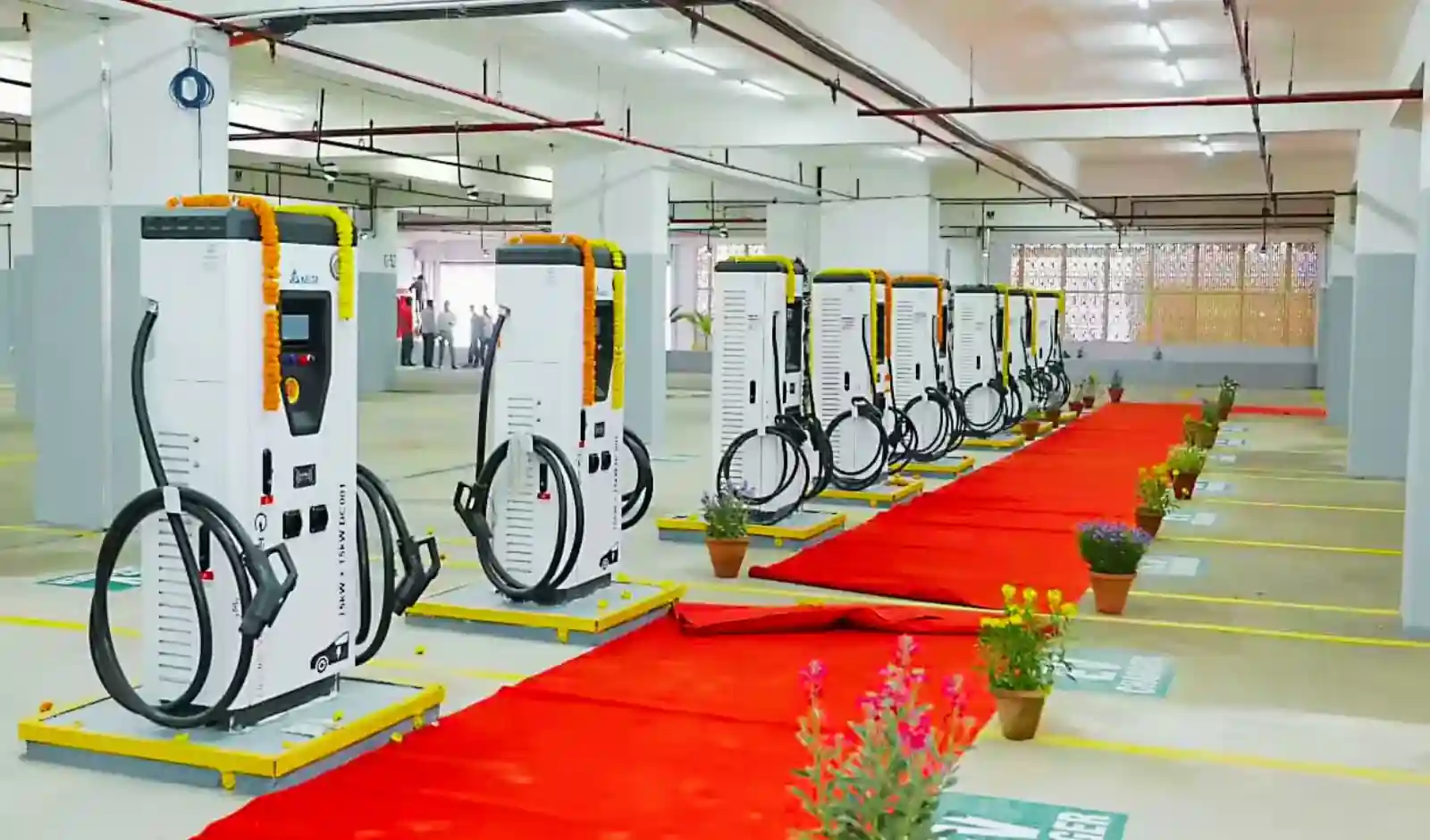
The government of Himachal Pradesh has made the installation of electric vehicle (EV) charging stations mandatory in commercial, public, and semi-public buildings as well as real estate projects. The provision has been introduced under the Himachal Pradesh Town and Country Planning (17th Amendment) Rules, 2026, officials said on Tuesday.
Town and Country Planning Minister Rajesh Dharmani stated that the move aligns with model building by-laws and aims to ensure that the state’s physical infrastructure evolves alongside the growing adoption of electric mobility. He added that the government is committed to transforming Himachal Pradesh into a green energy state and has introduced key policy changes to support sustainable urban development.
To promote energy efficiency, the state has also strictly implemented the HP Energy Conservation Building Code (HPECBC) Rules 2018. Under these rules, specialised buildings such as hotels, hospitals, educational institutions, and shopping complexes with an area of 750 square metres or more will receive an additional 0.25 Floor Area Ratio (FAR) over the base FAR of 1.75 if they comply with energy conservation standards.
To ensure compliance, developers will be required to engage energy auditors authorised by the Bureau of Energy Efficiency. These auditors will review project designs and monitor construction before municipal authorities issue occupancy certificates.
In addition, the 18th Amendment Rules, 2026 introduce a new fee structure for premium FAR in real estate projects. The rates range from ₹3,000 per square metre for up to 0.25 premium FAR and increase to ₹7,000 per square metre for ratios exceeding 0.50.
According to the government, these charges will not apply to already completed projects but will be mandatory for new blocks in ongoing developments and all upcoming real estate ventures. The provision will also allow developers to purchase additional FAR during the initial planning stages of their projects.
Experts believe that integrating EV charging infrastructure into building regulations is an important step toward promoting electric vehicles and supporting the state’s transition toward green energy and sustainable mobility.


