


 247
/
4
Min Read
247
/
4
Min Read


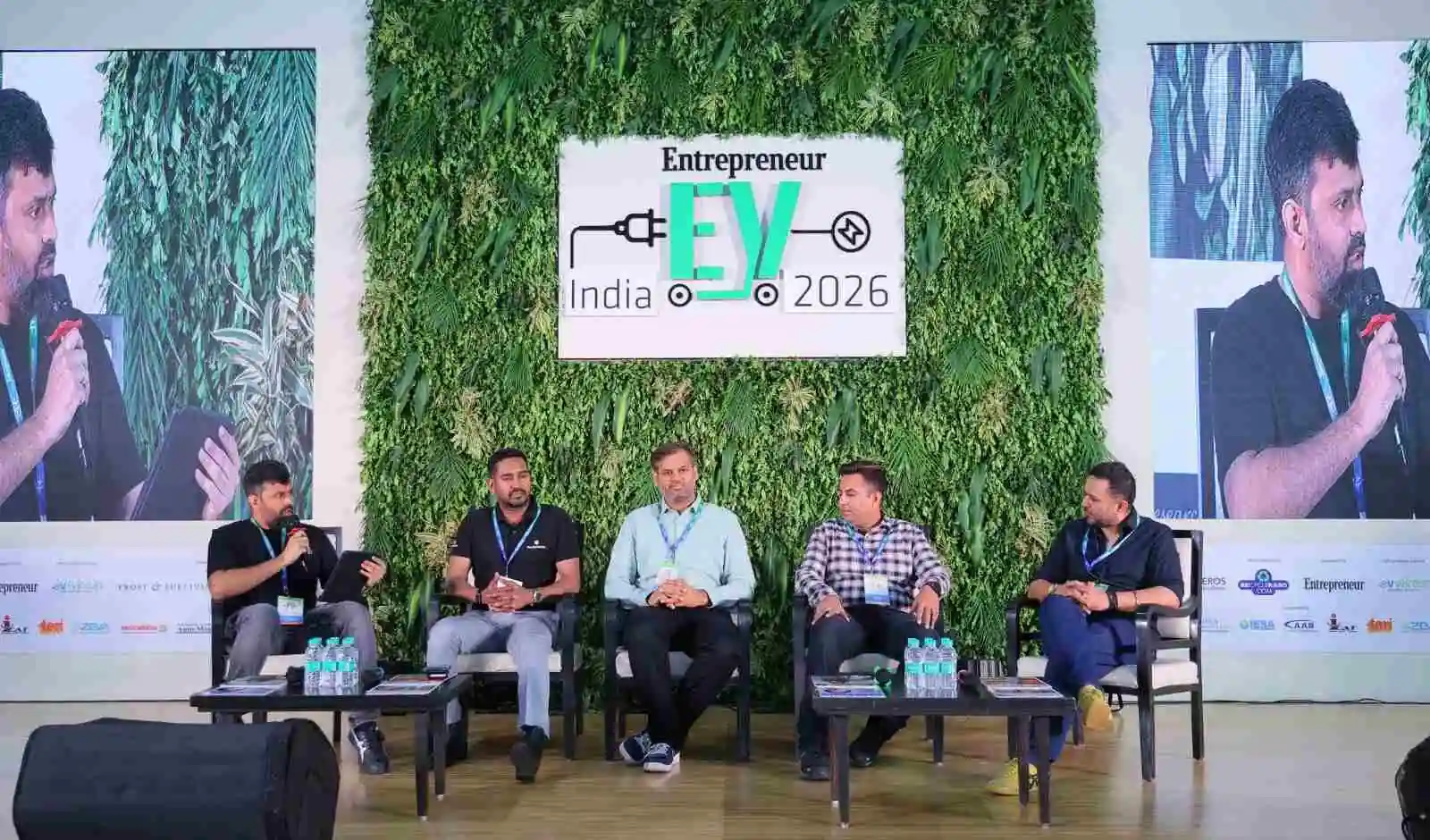
At the Entrepreneur India EV Expo & Conference 2026, an insightful panel discussion titled "Electrifying Commerce: Scaling EVs across Fleets and Logistics" brought together leading voices from India's electric mobility ecosystem to explore the opportunities and challenges of scaling commercial EV adoption. The session was moderated by Karthik Ganesh, Co-Founder, Fawkes Energy, and featured distinguished industry leaders including Abhinav Kalia, CEO & Co-Founder, ARC Electric; Akshat Modi, Head – Strategic Growth & Partnerships, Exponent Energy, Mishu Ahluwalia, Co-Founder & CEO, Trevel; and Vimal Singh, Founder & CEO, ReadyAssist.
The discussion examined the future of fleet electrification, rapid-charging infrastructure, premium electric mobility, operational efficiency, after-sales service, and access to finance. Drawing from their diverse expertise, the panelists shared practical insights on how innovation, collaboration, and customer-centric solutions are accelerating the transition towards a smarter, cleaner, and more sustainable commercial EV ecosystem in India.
What are corporate clients looking for when adopting EV fleets?
Abhinav Kalia: Corporate customers first look for operational reliability rather than cost. They evaluate fleet availability, technology, service-level agreements (SLAs), SOPs, business continuity plans, and response times. While ESG goals are becoming increasingly important, organizations also want dependable charging infrastructure, trained drivers, and seamless operations. Cost becomes important only after confidence in operational performance is established.
How is Exponent Energy solving the biggest challenge in EV adoption?
Akshat Modi: At Exponent Energy, we believe the biggest barrier to EV adoption isn't the vehicle—it's energy. Our full-stack approach integrates batteries, charging technology, and software to enable fast, reliable, and affordable charging. Commercial fleet operators need the flexibility to charge whenever and wherever required without disrupting operations. By controlling the complete charging ecosystem, we deliver a faster charging experience while maintaining battery health.
Why did Trevel enter the premium electric mobility market?
Mishu Ahluwalia: Our vision existed well before recent market changes. We identified a gap in premium, reliable, and safe electric mobility. Trevel is built on four pillars—reliability, safety, premium customer experience, and technology. We offer zero-cancellation service, AI-enabled safety systems, premium EVs, and a technology-first platform that ensures customers receive a consistent and high-quality travel experience.
How important is after-sales service in accelerating EV adoption?
Vimal Singh: Product innovation and charging infrastructure are important, but long-term success depends on after-sales service. Customers gain confidence only when they know support is available wherever they travel. ReadyAssist currently operates across more than 19,000 pin codes and partners with eight of India's top ten EV manufacturers. A strong nationwide service network is essential to building trust and accelerating EV adoption.
How can fleet operators improve operational efficiency?
Abhinav Kalia: We strategically developed charging hubs within a 5–7 km radius of our operating zones, reducing unnecessary vehicle movement and improving fleet utilization. The next challenge is expanding reliable charging infrastructure across Tier-2 and Tier-3 cities, which will further reduce range anxiety and improve commercial EV operations.
What is the biggest challenge in scaling premium EV fleets?
Mishu Ahluwalia: Access to capital remains the biggest challenge. Financing EV fleets is still more expensive than conventional vehicles because lenders remain uncertain about residual values. Easier financing, lower interest rates, and consistent government incentives across states will significantly accelerate commercial EV adoption.
Key Takeaways
Corporate fleet customers prioritize reliability, service quality, and operational excellence over initial cost.
Reliable fast-charging infrastructure is essential for commercial EV adoption.
Premium mobility services are creating new opportunities through technology, safety, and superior customer experience.
Strong after-sales service and nationwide support networks are critical for customer confidence.
Easier financing and supportive policies will play a vital role in scaling commercial electric mobility across India.
Conclusion
The panel concluded that India's commercial EV ecosystem is entering its next phase of growth. While vehicle technology continues to improve, the industry's future depends equally on charging infrastructure, financing, premium mobility solutions, and robust after-sales support. Collaboration among OEMs, fleet operators, energy providers, service partners, and policymakers will be the key to achieving large-scale EV adoption and building a sustainable electric mobility ecosystem.


