


 161
/
5
Min Read
161
/
5
Min Read


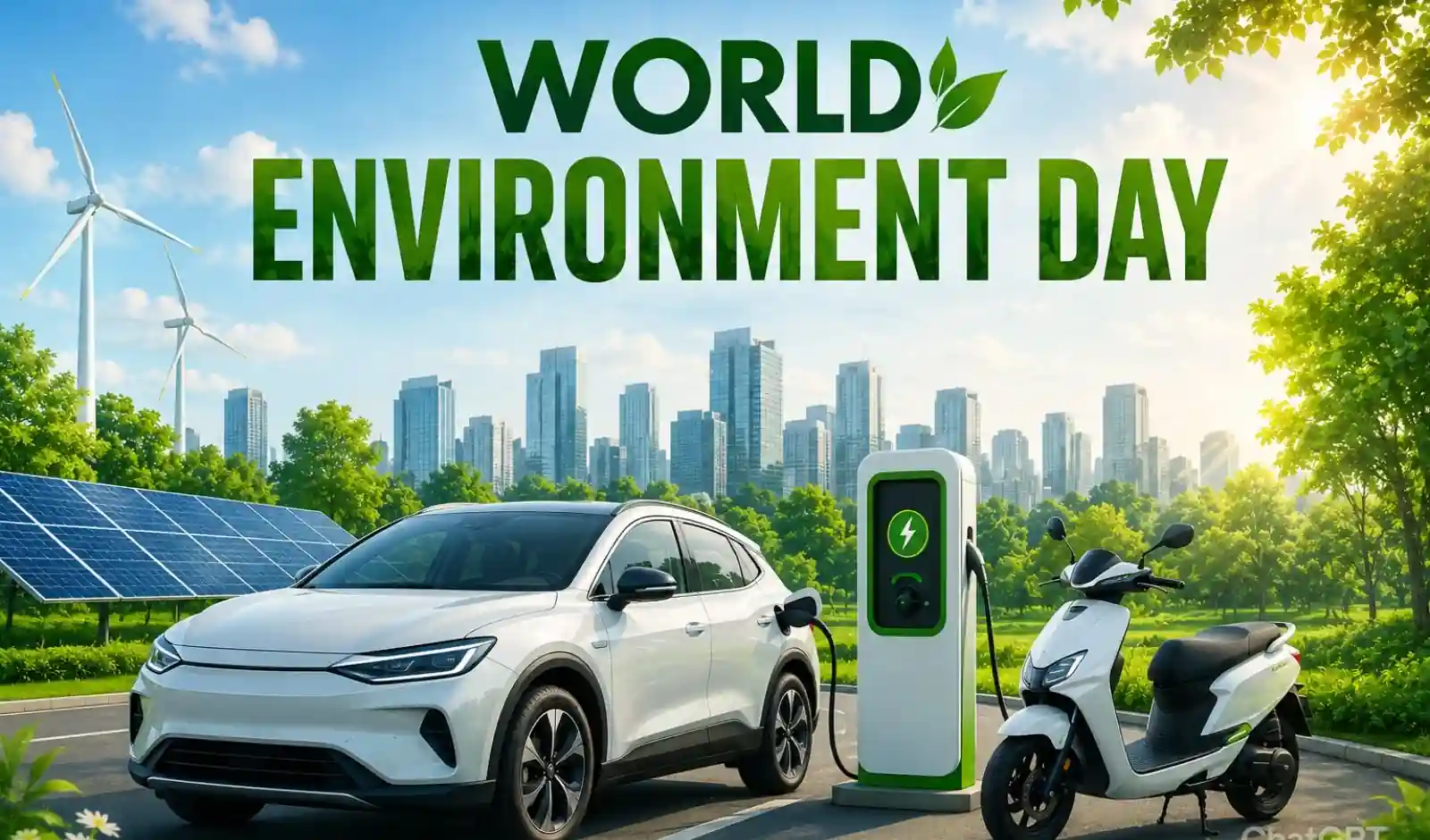
On the occasion of World Environment Day 2026, leading voices from India’s electric mobility, clean energy, and investment sectors shared their perspectives on climate change, energy security, and sustainable development. Under this year’s theme, “Inspired by Nature. For Climate. For Our Future,” industry leaders delivered a clear message that clean mobility and climate-conscious innovation are no longer just environmental necessities but are also critical for economic growth and national progress.
Energy Independence and EV Adoption Are Strategic Imperatives for India
Dr. Uday Narang, Founder and Chairman of Omega Seiki Mobility, stated that climate action and economic progress can no longer be viewed as separate conversations. He emphasized that every electric vehicle on Indian roads helps reduce emissions, lowers dependence on imported fuel, and strengthens the country’s energy security. According to him, energy independence is one of the most important pillars of India’s growth story and will play a significant role in the country’s journey toward becoming a global superpower over the next decade.
Dr. Narang added that sustainable mobility is not merely an environmental responsibility but also a strategic national opportunity capable of driving economic resilience, innovation, and long-term prosperity.
EV Adoption Is Both an Economic and Social Responsibility
Akshit Bansal, Founder and CEO of Statiq, said that global oil price volatility and dependence on fossil fuels have become major challenges for both the environment and the economy.
He noted that electric vehicles and clean fuel-based systems are no longer simply an alternative but the only practical solution. Amid rising fuel prices, EVs offer significant economic benefits to consumers as well.
According to Bansal, Statiq is building charging infrastructure where people live and work to make EV adoption easier and more convenient. He added that large-scale EV adoption across last-mile and urban transportation fleets can significantly reduce transport costs, emissions, and the impact of fuel price fluctuations.
Auto LPG Can Also Play a Key Role in Clean Mobility
Suyash Gupta, Director General of the Indian Auto LPG Coalition, pointed out that more than 330 million petrol and diesel vehicles are still operating on Indian roads, making them a major source of air pollution and carbon emissions.
While acknowledging the long-term potential of electric vehicles, he noted that affordability and charging infrastructure challenges continue to slow widespread adoption. In this context, Auto LPG can serve as a practical and immediately deployable clean-fuel alternative.
According to Gupta, Auto LPG produces almost negligible PM2.5 emissions and reduces NOx emissions by nearly 80% compared to petrol and diesel. He urged policymakers to encourage LPG retrofitting for BS-III and BS-IV vehicles, provide incentives through schemes such as FAME-II, and mandate Auto LPG dispensers at new fuel stations.
Climate-Conscious Investments Will Drive a Greener India
Jeet Mukesh Chandan, Group Managing Director of BizDateUp, said sustainability is no longer a choice but a responsibility toward future generations. He explained that the company is actively investing in sectors such as electric mobility, green energy, artificial intelligence, deep-tech, and sustainable infrastructure. Nearly 40% of BizDateUp’s investments are focused on the EV ecosystem.
According to Chandan, clean transportation can play a vital role in reducing carbon emissions, strengthening sustainable logistics, and creating long-term economic and environmental value. He emphasized that venture capital has a crucial role to play in supporting businesses that combine innovation with social and environmental impact.
Clean-Energy-Powered EVs Will Define the Future
Shekhar, Co-Founder and CEO of Kazam, said that India’s EV transition has moved well beyond the early-adoption phase. However, the true environmental value of an EV depends on how clean the electricity powering it actually is.
He stressed that India must focus not only on installing more charging stations but also on transforming homes, apartments, and workplaces into smart, decentralized energy hubs. According to him, renewable energy-based charging and intelligent energy management will be critical to making India’s EV revolution sustainable.
Shekhar highlighted that Kazam has enabled more than 100,000 charging points and deployed over 150,000 home chargers, helping three-wheeler drivers reduce operating costs by 25–30%. He believes the future EV ecosystem must be grid-aware and powered by solar energy.
Clean Mobility Is No Longer an Option—It Is a Necessity
The collective message from industry leaders on World Environment Day was clear: India must accelerate the adoption of clean fuels, electric vehicles, energy-efficient charging networks, and climate-conscious investments.
Experts agree that whether through EVs, Auto LPG, or renewable energy-based solutions, the technologies and solutions already exist. The challenge now lies in scaling them rapidly.
As India stands at a critical intersection of economic growth and environmental responsibility, sustainable development is no longer just a policy objective—it has become a public health priority, a business opportunity, and a national imperative. Industry leaders believe that decisive action today will determine India’s ability to build a cleaner, greener, and more resilient future.


