


 109
/
4
Min Read
109
/
4
Min Read


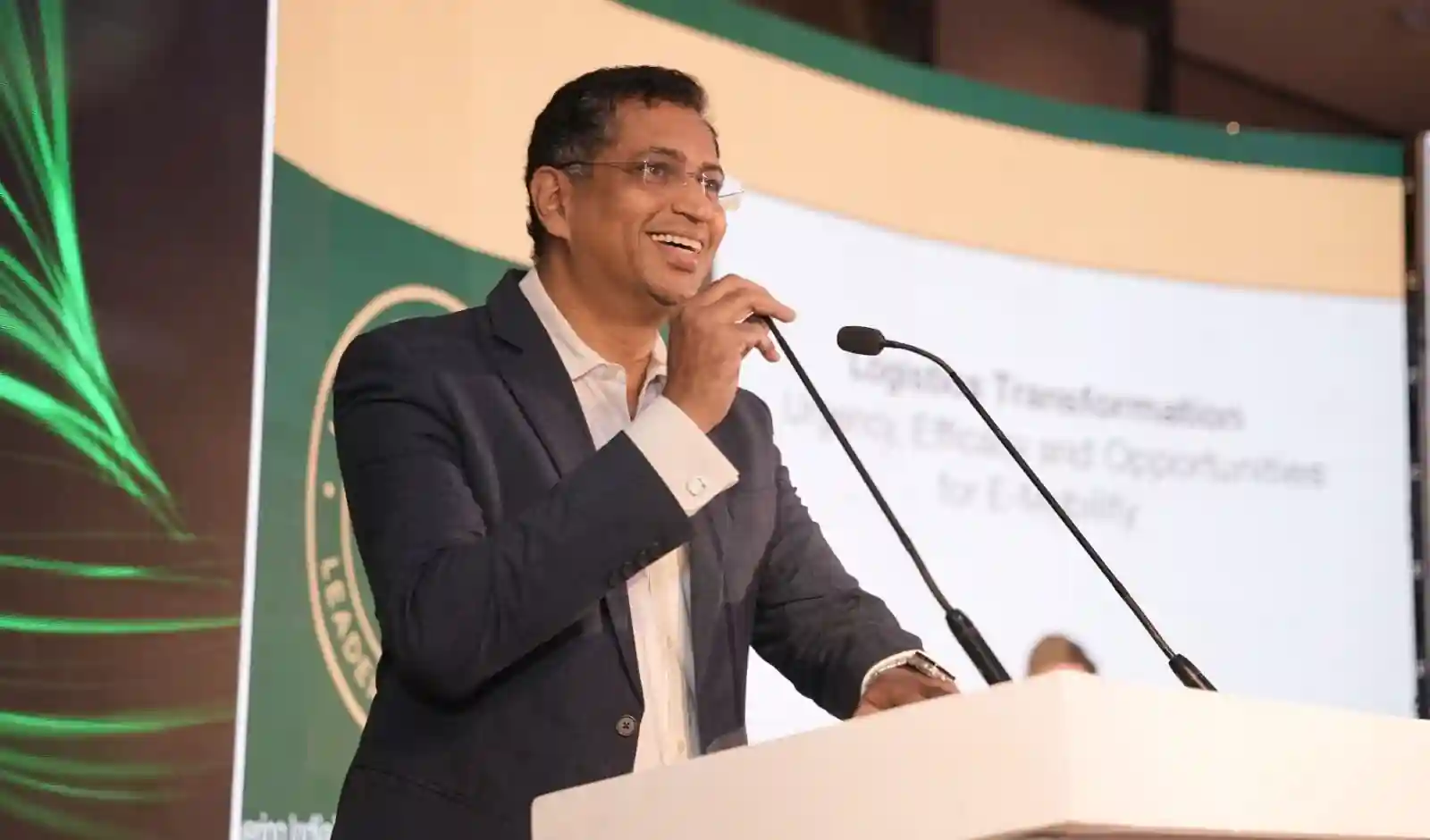
Electric mobility in India is no longer a vision of the future but a rapidly evolving reality. The transformation underway in the logistics sector is not only redefining transportation costs and efficiency but also reshaping the industry’s operational framework. Experts highlighted that e-mobility is no longer an option but a competitive necessity where technology, data, and sustainable energy together are laying the foundation for a new era of transportation.
At Mile 2026 & Mile Honours 2026 – West Edition, held on 17 February 2026 at JW Marriott Mumbai Sahar, Maxson Lewis, Founder and Chairman of Magenta Mobility, spoke on the Topic “Logistics Transformation: Urgency, Efficacy and Opportunities for E-Mobility.” He stated that India’s electric vehicle revolution has already begun, but it is often perceived as limited to private four-wheelers. The real transformation is happening in logistics, where electric three-wheelers and light trucks are being rapidly adopted. In January alone, 2.18 lakh electric vehicles were registered out of 27 lakh total vehicles, indicating nearly a 10% share. The growing adoption in cargo transport is primarily driven by lower operating costs and stronger business viability.
He explained that the total cost of ownership (TCO) for electric vehicles in logistics has become commercially viable. While electric four-wheelers earlier cost about 30% more than conventional vehicles, the premium in the cargo segment has reduced to around 15%, making cost parity achievable within three years. Advancements in battery technology, faster charging, financial support, and data-driven operations have further accelerated this shift.
Lewis emphasized that electric vehicles are no longer just an environmental initiative but a profitable business solution. Companies are now transporting not only e-commerce goods but also medicines, food products, industrial materials, and other cargo using electric fleets. In the future, data-driven services, energy management, and smart tracking systems are expected to completely transform the logistics sector.
He noted that a few years ago people asked, “What is an EV?” Later the question became, “Why buy an EV?” In the coming years, he said, people may begin asking, “What is an ICE vehicle?” According to him, India’s transportation future is rapidly moving toward electrification, and the shift is irreversible.
He also shared that Magenta Mobility currently operates nearly 3,000 electric cargo vehicles, including 2,200 electric three-wheelers and around 800 electric four-wheelers. The company runs more than 100 charging stations and has a dedicated technology team monitoring fleet operations. Earlier, drivers and small operators hesitated to adopt EVs due to limited access to finance, technology, and charging infrastructure. However, adoption is accelerating as financial institutions increase support and capital becomes more accessible. He cited recent green financing initiatives launched by Bank of Baroda as a positive development.
During his address, Lewis described electric vehicles as “mobile phones on wheels,” highlighting their advanced data connectivity and real-time monitoring capabilities. These features enable route optimization, battery health tracking, and operational efficiency improvements that are difficult to achieve with traditional diesel vehicles. He added that future logistics transformation will be driven by energy-as-a-service and data-as-a-service models.
Industry experts at the event also discussed the expanding influence of electric mobility in western India. Speakers emphasized that states like Maharashtra played a pioneering role by developing early charging infrastructure, providing a strong foundation for the country’s e-mobility growth.
In conclusion, Lewis stated that logistics companies are now prioritizing electric vehicles not just for sustainability but for superior cost efficiency and operational performance. With widespread adoption by e-commerce and supply chain companies, the transition is accelerating rapidly. According to him, electric transportation is set to become a key pillar of India’s economic and industrial progress in the years ahead.


