


 114
/
5
Min Read
114
/
5
Min Read


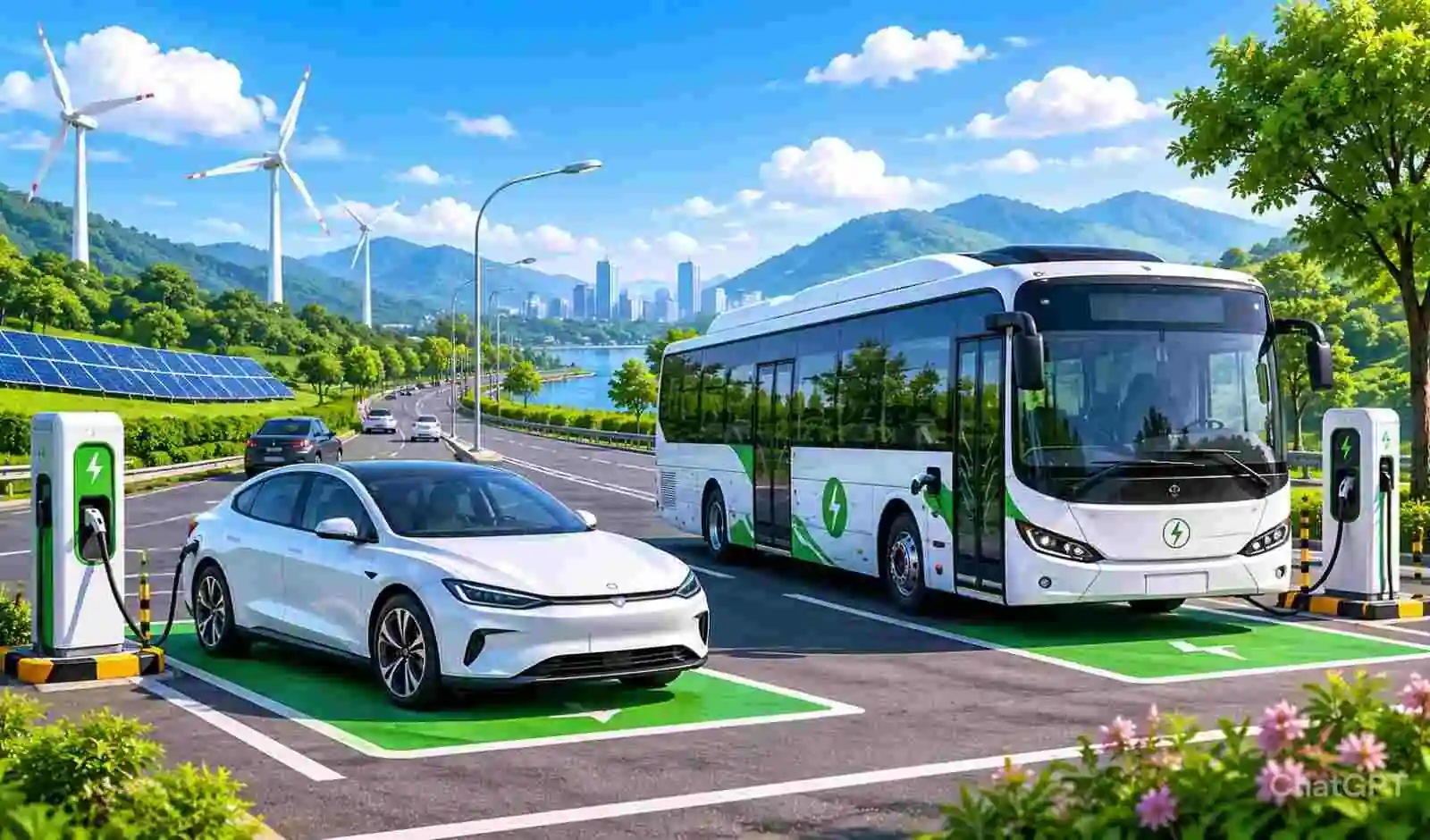
Electric vehicle (EV) usage is growing rapidly in India. Earlier, EVs were considered suitable only for short-distance travel within cities, but with advancements in technology and charging infrastructure, electric vehicles are now becoming capable of long-distance travel as well. In this context, “intercity EV charging” a strong charging network between cities has become extremely important.
Even today, many people hesitate to buy electric cars due to “range anxiety,” the fear that the battery may run out during long journeys and there may be no charging station available on the way. If reliable charging stations are available on highways and major routes, people will be able to travel long distances in EVs without worry.
The government and private companies are jointly expanding the EV charging network across the country at a rapid pace. Many companies are installing fast chargers at highways, hotels, malls, petrol pumps, and food courts, making charging more accessible for travelers during their journeys.
Due to fast-charging technology, EVs no longer need hours to charge. Modern chargers can recharge a large portion of the battery in just 20–30 minutes, making long-distance travel much more convenient than before.
Akshit Bansal,Founder and CEO, Statiq said that intercity EV charging in India is no longer just an infrastructure challenge, but a trust challenge. The real issue is not whether chargers exist, but whether people can consistently rely on them during long journeys. He added that when families, fleet operators, and business travelers begin to trust EVs the same way they trust petrol and diesel vehicles, EV adoption will become a habit.
He further said that Statiq has built its network keeping India’s real travel needs in mind. The company currently operates more than 10,000 EV chargers across over 1,000 cities, making it one of the largest and most accessible charging networks in the country. Its focus is on installing fast chargers not only in cities but also along highways and major travel routes to make long-distance travel easier.
Akshit Bansal added that the next phase of EV infrastructure is not just about increasing the number of chargers, but about delivering a better and more reliable experience. For intercity travel, chargers must be located where people naturally stop, such as highways, food courts, hotels, and safe rest areas. Fast and reliable charging performance is equally important.
He said Statiq views this as a complete ecosystem where hardware, software, vehicle manufacturers, fleet partners, real estate, and government institutions work together to make EV travel seamless at scale.
According to him, if India develops its intercity EV charging network properly, the impact will go beyond easier road trips. It will strengthen trust in electric mobility, which in turn will accelerate EV adoption in Tier-2 and Tier-3 cities, making electric travel practical, reliable, and mainstream for millions of Indians.
Prashanth Doreswamy, President & CEO of AUMOVIO India, said that the world is rapidly shifting toward electric vehicles (EVs), along with major advancements in safety, performance, and long-distance travel technologies.
He explained that advanced sensor systems in battery electric vehicles (BEVs) play a key role in protecting critical components such as battery management systems, high-voltage systems, thermal management, and electric drivetrains. AI-based diagnostics, IoT monitoring, and smart safety technologies are improving vehicle efficiency, energy savings, and long-term reliability.
Prashanth Doreswamy added that EV charging infrastructure is also becoming stronger. Fast charging, high-power charging, and smart energy management technologies are now making intercity EV travel more convenient and reliable.
He said these innovations will play a crucial role in shaping a safe, smart, and environmentally friendly electric mobility future.
Government Initiative
To promote intercity EV charging, the Government of India is also working actively. Recently, the Ministry of Heavy Industries organized a national conference in Bengaluru on EV charging infrastructure. During the event, Union Minister of Heavy Industries and Steel H. D. Kumaraswamy announced the approval of proposals worth ₹503.86 crore under the PM E-DRIVE scheme for the installation of 4,874 EV chargers across the country.
Under this plan, Karnataka will receive 1,243 chargers with an allocation of ₹123.26 crore. Charging networks will also be expanded across Rajasthan, Andhra Pradesh, Uttar Pradesh, Gujarat, Kerala, Telangana, Tamil Nadu, and other states.
The government stated that major oil companies such as Indian Oil Corporation Limited, Bharat Petroleum Corporation Limited, and Hindustan Petroleum Corporation Limited will play an important role in implementing this project. The network will support electric two-wheelers, three-wheelers, cars, buses, and trucks.
PM E-DRIVE Scheme Benefits
The total budget of the PM E-DRIVE scheme is ₹10,900 crore. Out of this, ₹2,000 crore is allocated for public charging infrastructure. Additionally, ₹3,679 crore is set aside as incentives to promote electric two- and three-wheelers. ₹4,391 crore has been allocated for the deployment of 14,028 electric buses across the country. The government will also spend ₹780 crore on modernizing vehicle testing agencies to strengthen the EV ecosystem.
Conclusion
The rapid expansion of intercity EV charging networks in India is strengthening the future of electric mobility. With joint efforts from the government, private companies, and technology providers, long-distance travel in electric vehicles is becoming easier, safer, and more reliable than ever before.
Fast charging, smart energy management, AI-based systems, and strong infrastructure will not only reduce “range anxiety” but also accelerate EV adoption in Tier-2 and Tier-3 cities. In the coming years, this transformation will play a key role in making India’s transportation system cleaner, smarter, and more Sustanable.


