


 237
/
3
Min Read
237
/
3
Min Read


India’s electric mobility journey is no longer limited to vehicles; it has evolved into a broader structural transformation. Today, EVs are not just a technological shift but a comprehensive ecosystem encompassing energy security, manufacturing capabilities, environmental responsibility, and innovation.
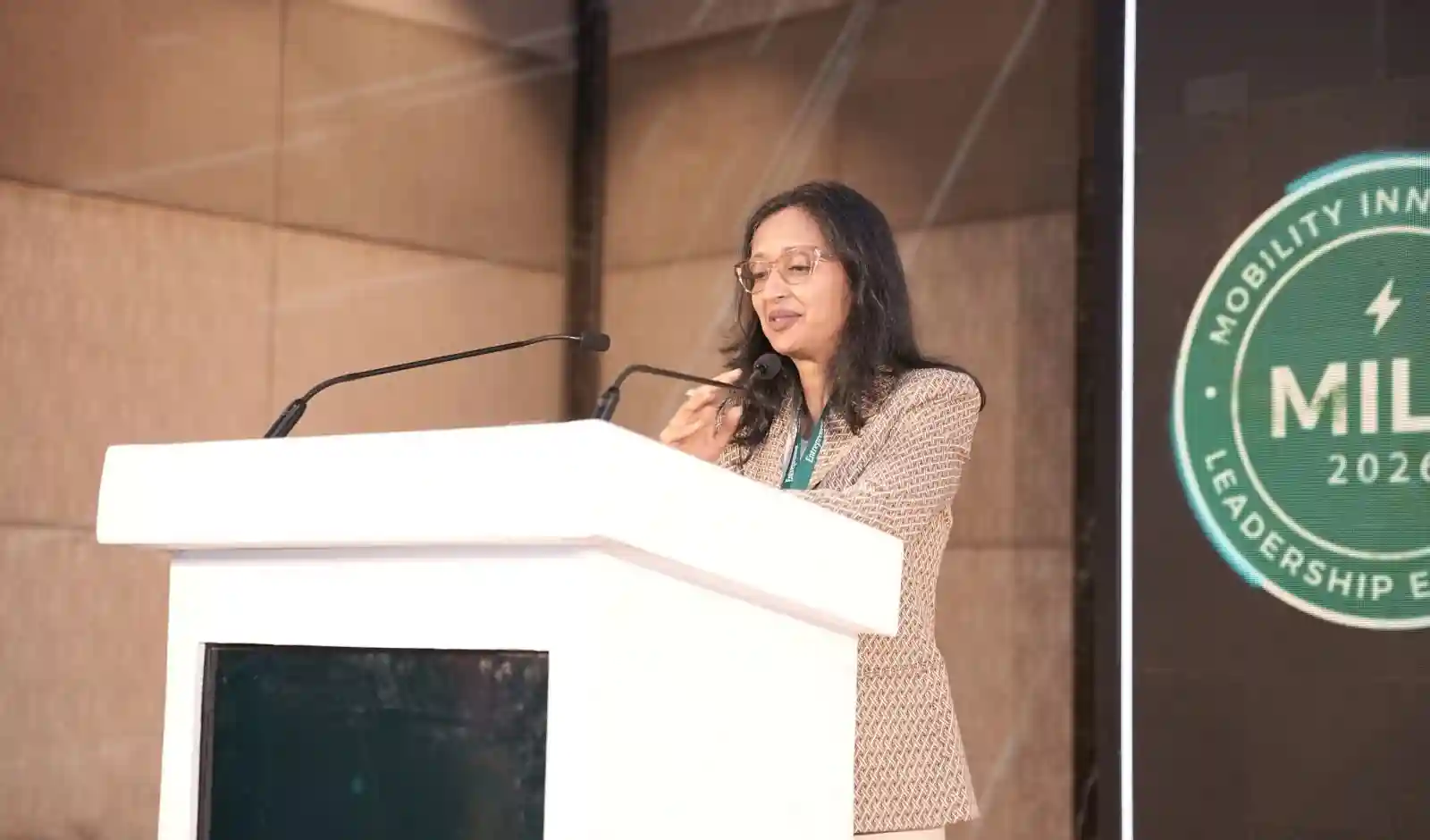
Ashita Marya, CEO of Franchise India and Consulting Editor at Entrepreneur India, highlighted that to accelerate this transition, Entrepreneur continues to build platforms that bring together industry leaders, policymakers, and technology experts for meaningful dialogue. Over the past four years, the India EV Show in Chennai has emerged as one of the country’s most credible electric mobility forums. This year, the event will be held on June 27–28 in Chennai, bringing key stakeholders together to discuss solutions and strategies.
Building on this, a new platform called “Mile” has been launched, starting with its West India Edition. The initiative recognises that EV adoption in India is highly regional, requiring localized focus, ecosystem participation, and on-ground collaboration.
The EV landscape varies significantly across states. Uttar Pradesh is witnessing rapid growth in electric three-wheelers and last-mile connectivity, where EVs have become income-generating assets. Maharashtra is driven by strong urban demand, manufacturing strength, and policy continuity. Karnataka has emerged as a technology hub, leading in software platforms, charging management, and battery analytics.
Delhi showcases policy-led acceleration, with strict regulations and expanding infrastructure driving adoption, while Tamil Nadu anchors manufacturing, supply chains, and industrial depth in the EV ecosystem.
Notably, EV growth in India is driven more by fleets, public transport, and logistics rather than private ownership. In these segments, reliability, uptime, and cost per kilometre matter more than design or range—making EVs viable even in the most demanding applications.
According to industry data, around 2.2 million electric vehicles were sold in India in the last financial year, reflecting a 46% year-on-year growth. In January 2026 alone, electric car sales crossed 18,000 units, marking a 54% increase, driven by rising consumer confidence, investments, and policy support.
Government initiatives such as FAME-II, the Production Linked Incentive (PLI) scheme, advanced chemistry cell programs, and national electric bus initiatives have laid a strong foundation. Investments exceeding ₹60,000 crore have energized domestic manufacturing and supply chains.
However, the next phase of growth will depend not just on volumes but on localisation, innovation, supply chain resilience, and global competitiveness. Key challenges include developing indigenous technologies, managing battery life cycles responsibly, and integrating renewable energy with mobility.
Globally, China has scaled through manufacturing and subsidies, the US remains consumer-driven, and Europe is regulation-led. India, however, is charting its own path, focusing on fleet-led adoption, software-driven efficiency, and energy integration.
Looking ahead, the EV sector’s priorities will include reliable charging infrastructure, robust battery management, sustainable financing models, and building consumer trust. This responsibility lies not only with the government but also with industry players, startups, and entrepreneurs.
Platforms like “Mile” aim to strengthen this collaboration by connecting policy with execution, capital with capability, and innovation with responsibility. Ultimately, the future of electric mobility will be shaped not just by products, but by strong systems and partnerships that can drive India toward a sustainable and self-reliant mobility ecosystem.


