


 257
/
4
Min Read
257
/
4
Min Read


Maharashtra has set a benchmark in India’s electric mobility sector. The state’s strategy is not limited to vehicle registrations but extends electrification to heavy vehicles, logistics fleets, agricultural machinery, and off-road equipment.
Under Vision 2030, Maharashtra is integrating manufacturing, infrastructure, financial models, and demand mapping to create a stable and sustainable EV ecosystem. This initiative links innovation with stability, policy support, and an investment-ready framework, aiming to make India’s e-mobility transition lasting.
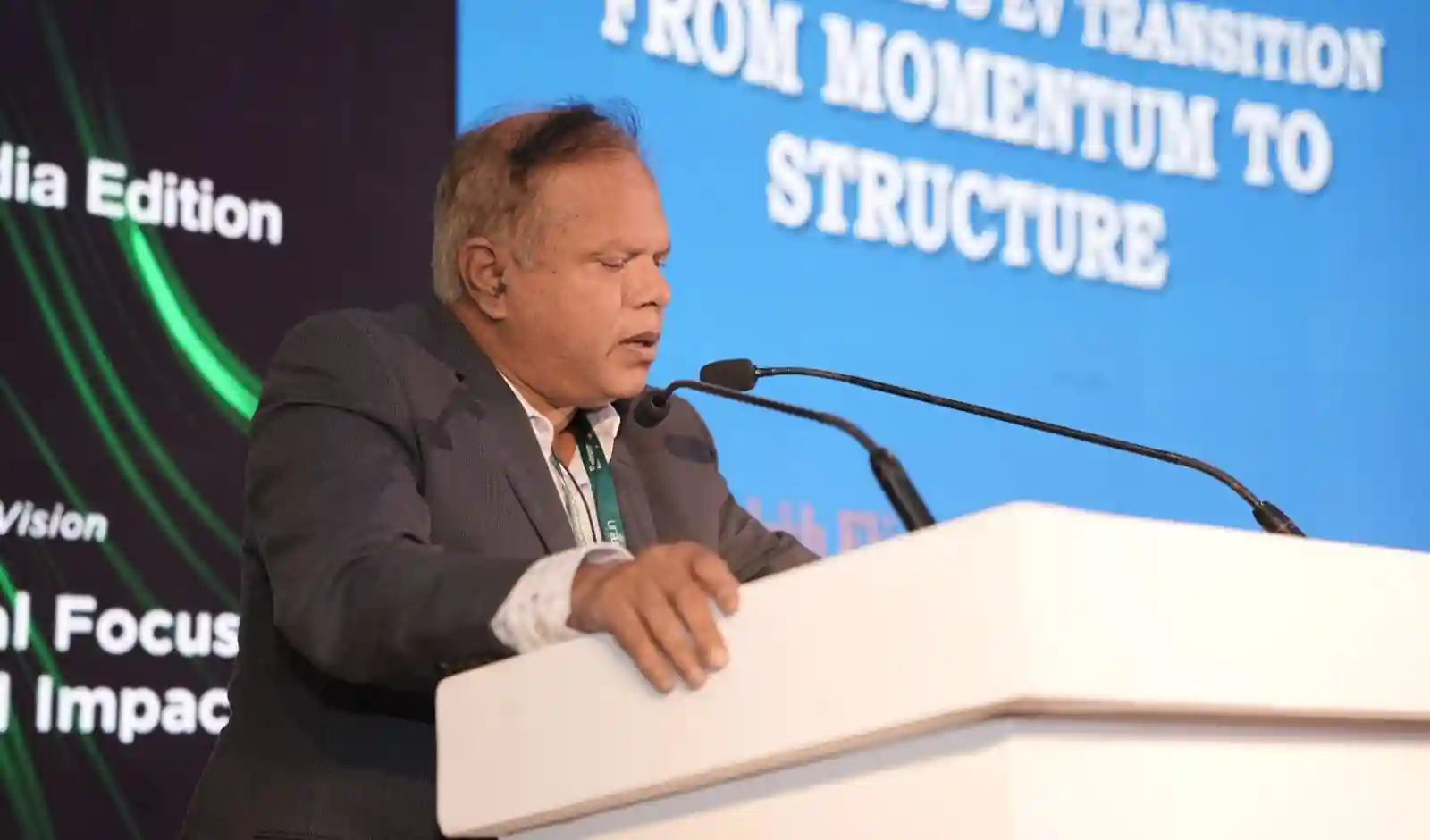
Jitendra Patil, Head- EV Cell, Maharashtra, while discussing “Maharashtra’s E-Mobility Development Model: Vision 2030 and Beyond,” highlighted that innovation excites markets, but governance stabilizes them. For India’s EV transition to be durable and not just a trend, it must be institutionalized and Maharashtra is playing a key role here.
In 2025 alone, Maharashtra led as the top state in mainstream electric vehicle registrations, with around 28,000 electric motor cars, 1,398 electric buses, 2,207 electric goods vehicles, and 7,577 L5M vehicles, totaling approximately 257,000 annual EV registrations. This exceeds 10–11% of the policy’s intended target.
Importantly, these registrations are not in the low-speed category. These are real electric vehicles, not just e-rickshaws or e-carts. This demonstrates that electrification in Maharashtra is tangible buses, freight vehicles, private vehicles, and regulated passenger transport are being electrified. These are high-impact segments with higher fuel consumption.
In terms of logistics transformation, medium- and heavy-duty vehicles dominate state transport buses, freight trucks, and commercial carriers. Heavy vehicles disproportionately contribute to diesel consumption and pollution, particularly in urban areas like MMR and PMR, and also represent a significant portion of logistic costs.
To decarbonize urban Maharashtra, certain corridors have been identified for electrification, including the Mumbai–Pune corridor, JNPT port area, and MIDC industrial clusters.
The EV Cell is also focusing on agriculture and off-road vehicles, which hold tremendous electrification potential. Electric tractors, tillers, and battery-powered farm logistics vehicles can reduce diesel dependence and operating costs for farmers.
Off-road vehicles such as forklifts, cranes, mining equipment, port machinery, construction equipment, airport ground support vehicles, and other special-purpose vehicles are also potential candidates for electrification. Defined geographies like ports and industrial clusters make it easier to deploy charging infrastructure effectively.
A critical factor for EV success is demand mapping in upstream electricity planning. The Maharashtra government, in collaboration with the energy department, is mapping vehicle registrations, corridors, substation load forecasts, fast-charging clusters, and freight demand aggregation to ensure reliable charging infrastructure.
Maharashtra accounts for 20% of India’s vehicle manufacturing and 21% of automotive components, with MSMEs contributing 97% of the production. The EV segment employs 279,080 formal workers across 10,874 MSMEs, with Pune and Chhatrapati Sambhaji Nagar identified as major clusters.
Studies indicate that 31% of ICE-related jobs may be affected by the EV transition. However, new opportunities are emerging in battery pack manufacturing, power electronics, EV substations, subsystems, embedded software, charging stations, and battery recycling.
The biggest bottleneck remains financial readiness — particularly the residual value of electric vehicles. Fleet operators face uncertainty over resale values, while lenders and investors are hesitant. Structured risk-sharing frameworks and charging asset viability models are being developed to address these challenges.
The Maharashtra EV Policy (2030 and beyond) urges industry focus on:
- Large-scale adoption of electric agricultural tractors
- Electric heavy goods vehicles, e.g., JNPT to Panvel logistics hub
- Electric forklifts, cranes, and special-purpose vehicles
For Vision 2030, Maharashtra aims to:
- Deepen heavy vehicle electrification
- Establish five charging corridor networks
- Launch agricultural electrification pilot projects
- Integrate demand mapping into infrastructure planning
- Align manufacturing growth with EV adoption
The Maharashtra EV Policy (2025–2030) provides zero motor vehicle tax on electric vehicles and offers basic demand incentives to OEMs in select categories.
Conclusion
Maharashtra’s e-mobility model not only promotes innovation and technology but also integrates governance, manufacturing, finance, and infrastructure to make the transition stable and sustainable. Through the electrification of heavy vehicles, logistics fleets, agricultural equipment, and off-road machinery, the state has created a comprehensive ecosystem. Under Vision 2030, Maharashtra is paving a solid and organized path to accelerate EV adoption, build investor confidence, and achieve environmental goals. In this way, Maharashtra is emerging as a model state in India’s e-mobility sector, driving sustainable and impactful change.


